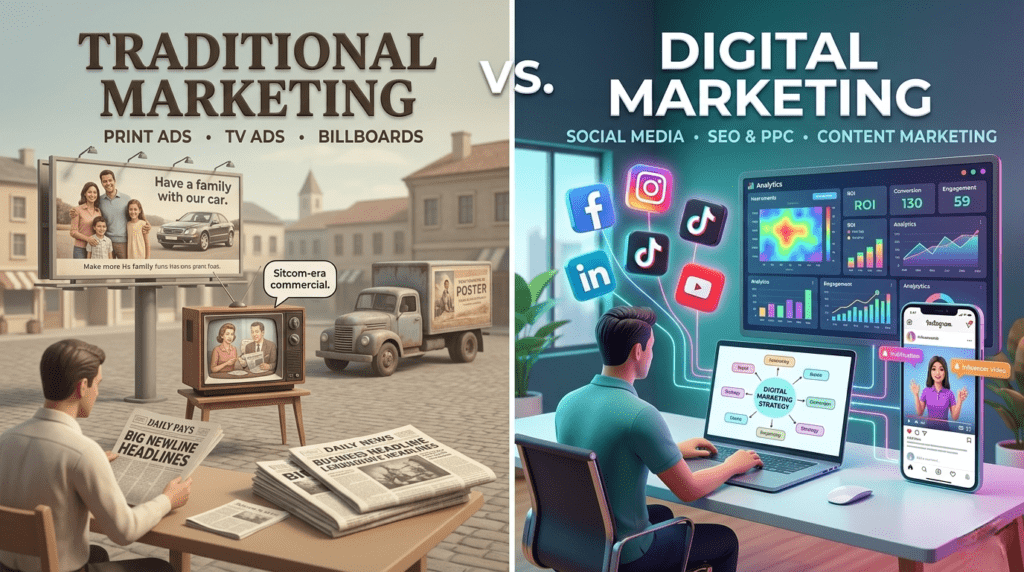
In today’s fast-evolving business landscape, one of the most important decisions for any entrepreneur, marketer, or business owner is choosing the right marketing strategy. The debate around digital marketing vs traditional marketing has become more relevant than ever, especially as technology continues to reshape how businesses connect with their audience. Understanding the difference between these two approaches is essential for making informed decisions that can directly impact your business growth, lead generation, and revenue.
Traditional marketing has been around for decades and includes methods such as newspaper advertisements, television commercials, radio promotions, billboards, and direct mail. These methods have proven effective in building brand awareness and reaching a broad audience. On the other hand, digital marketing is a modern approach that uses online platforms such as search engines, social media, email, and websites to promote products and services. It allows businesses to target specific audiences, measure results, and optimize campaigns in real time.
When comparing digital marketing vs traditional marketing, it is important to understand that both have their own strengths and limitations. The right choice depends on your business goals, target audience, and budget. In this blog, we will explore every aspect of digital marketing vs traditional marketing in detail, so you can decide which approach is best for your business in 2026 and beyond.
Table of Contents
ToggleWhat is Traditional Marketing?
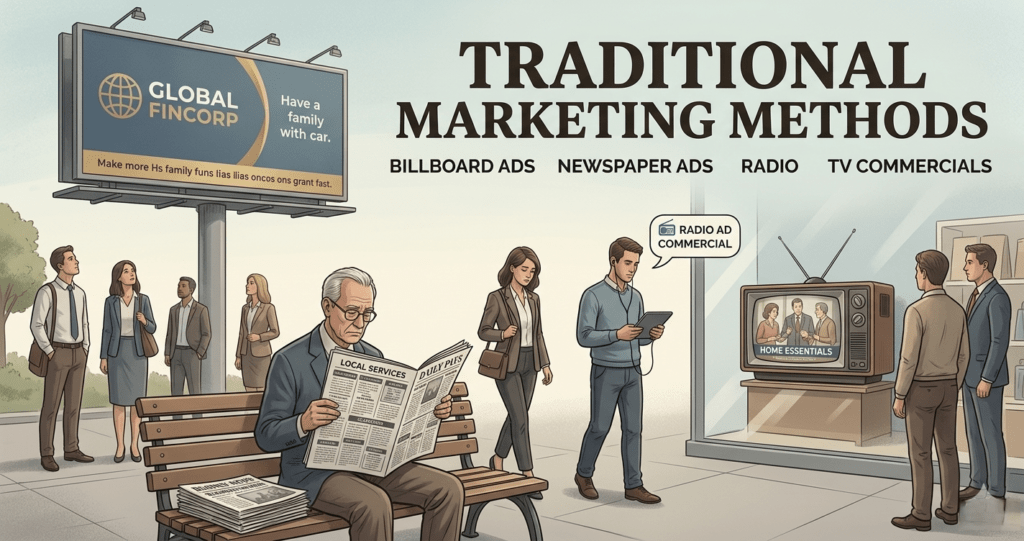
Traditional marketing refers to the conventional methods of promoting products and services that have been used for many years. These methods include print advertisements in newspapers and magazines, television and radio commercials, outdoor advertising such as billboards and hoardings, and direct mail campaigns. The primary goal of traditional marketing is to reach a large audience and create brand awareness.
One of the key characteristics of traditional marketing is that it is mostly one-way communication. Businesses send their message to the audience, but there is limited interaction or feedback. For example, when a company runs a television advertisement, viewers can see the ad but cannot directly engage with it. This makes it difficult to measure the effectiveness of campaigns accurately.
Despite these limitations, traditional marketing still plays an important role in many industries. It is especially effective for local businesses, large brands, and products that require mass visibility. For example, a billboard placed in a high-traffic area can attract attention from thousands of people every day, making it a powerful tool for brand recognition.
What is Digital Marketing?
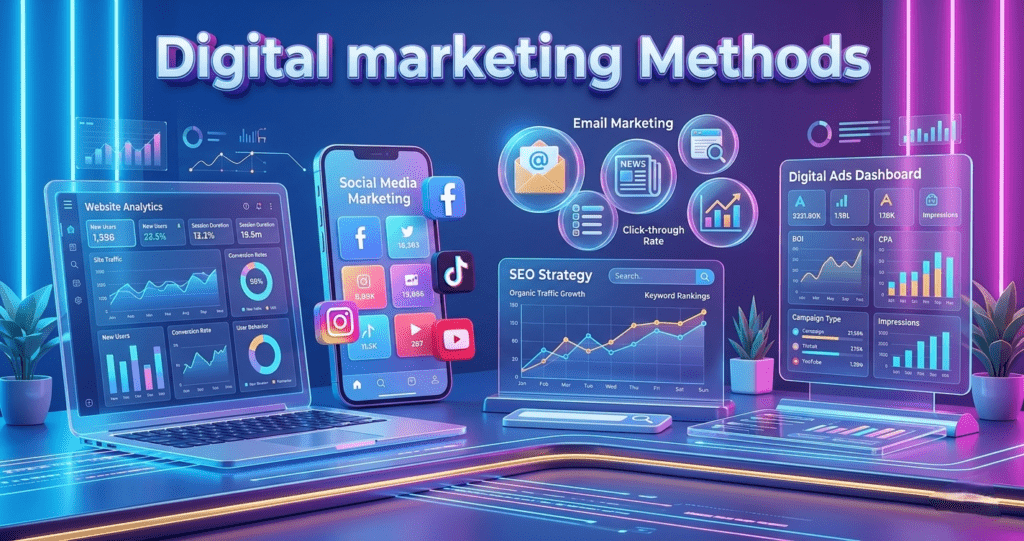
Digital marketing is a modern marketing approach that uses online platforms and digital technologies to promote products and services. It includes various strategies such as search engine optimization (SEO), social media marketing, content marketing, email marketing, and paid advertising through platforms like Google Ads and Facebook Ads.
Unlike traditional marketing, digital marketing allows two-way communication between businesses and customers. This means that customers can interact with brands through comments, messages, reviews, and feedback. This interaction helps businesses build stronger relationships with their audience and improve their products and services.
One of the biggest advantages of digital marketing is its ability to target specific audiences. Businesses can use data and analytics to identify their ideal customers based on factors such as age, location, interests, and behavior. This ensures that marketing efforts are directed towards people who are more likely to be interested in the product or service.
When analyzing digital marketing vs traditional marketing, it becomes clear that digital marketing offers more flexibility, control, and measurable results. Businesses can track every aspect of their campaigns, including clicks, conversions, and return on investment, which makes it easier to optimize strategies for better performance.
Key Differences Between Digital Marketing vs Traditional Marketing
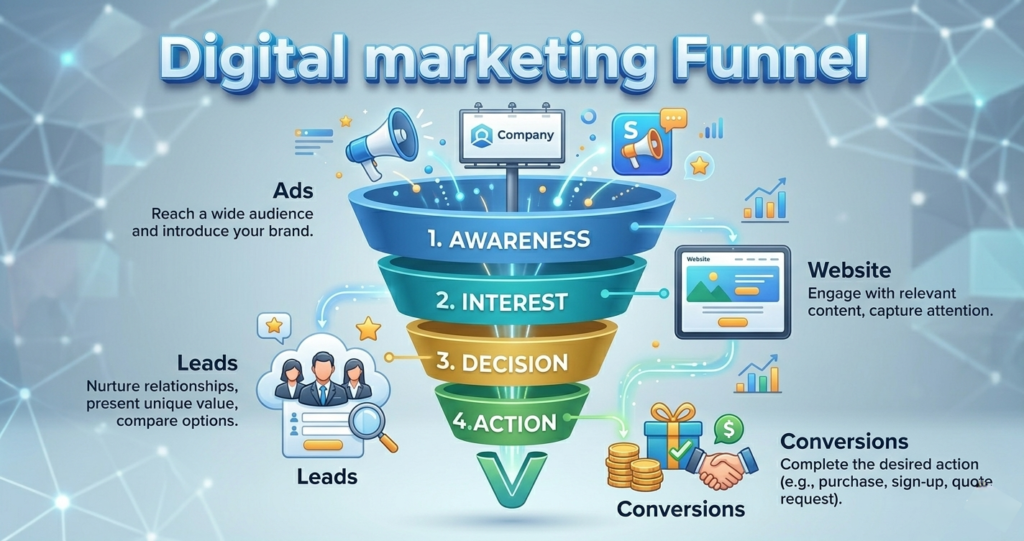
The comparison of digital marketing vs traditional marketing highlights several key differences that can influence your marketing strategy.
One of the most significant differences is the mode of communication. Traditional marketing relies on one-way communication, whereas digital marketing enables two-way interaction. This allows businesses to engage directly with their audience and build stronger relationships.
Another important difference is targeting. Traditional marketing targets a broad audience without much segmentation, while digital marketing allows precise targeting based on user data. This makes digital marketing more efficient and cost-effective.
Cost is also a major factor when comparing digital marketing vs traditional marketing. Traditional marketing methods such as television ads and billboards can be expensive, making them less accessible for small businesses. In contrast, digital marketing offers affordable options that can fit any budget.
Measurement and analytics are where digital marketing truly stands out. Traditional marketing makes it difficult to track results, while digital marketing provides detailed insights into campaign performance. This allows businesses to make data-driven decisions and improve their strategies continuously.
Advantages of Traditional Marketing
Even in the era of digital transformation, traditional marketing still has its own advantages. One of the biggest benefits is its ability to reach a wide audience. Television, radio, and print media can reach millions of people, making them ideal for large-scale campaigns.
Another advantage is credibility. Many people trust traditional advertisements more than online ads, especially older generations who are more familiar with these methods. A well-designed newspaper ad or a professional television commercial can create a strong impression and enhance brand reputation.
Traditional marketing is also effective for local targeting. For example, a local business can use flyers, banners, and newspaper ads to reach customers in a specific area. This makes it a valuable tool for small businesses that rely on local customers.
Advantages of Digital Marketing
When comparing digital marketing vs traditional marketing, digital marketing offers several advantages that make it a preferred choice for modern businesses. One of the most important benefits is cost-effectiveness. Businesses can run campaigns with a small budget and still achieve significant results.
Another major advantage is targeting. Digital marketing allows businesses to reach their ideal audience with precision, which increases the chances of conversion. This ensures that marketing efforts are not wasted on uninterested users.
Real-time tracking and analytics are also key benefits of digital marketing. Businesses can monitor campaign performance instantly and make adjustments to improve results. This level of control is not possible with traditional marketing.
Digital marketing also provides flexibility. Campaigns can be started, paused, or modified at any time, giving businesses the ability to respond quickly to market changes. This makes digital marketing highly adaptable and efficient.
Disadvantages of Traditional Marketing
While traditional marketing has its strengths, it also has several limitations. One of the main disadvantages is the high cost. Advertising on television, radio, or print media can be expensive, which may not be feasible for small businesses.
Another drawback is the lack of targeting. Traditional marketing methods do not allow precise audience segmentation, which can result in wasted resources. Businesses may end up reaching people who are not interested in their products or services.
Measuring the effectiveness of traditional marketing campaigns is also challenging. Without accurate data, it is difficult to determine the return on investment and make informed decisions.
Disadvantages of Digital Marketing
Despite its many advantages, digital marketing also has some challenges. One of the main issues is competition. Since digital marketing is widely accessible, businesses face intense competition in the online space.
Another challenge is the need for continuous learning. Digital marketing trends and algorithms are constantly changing, which requires businesses to stay updated and adapt their strategies.
Digital marketing also depends heavily on technology. Technical issues, platform changes, or algorithm updates can impact campaign performance, making it important to have a strong understanding of the digital ecosystem.
Which is Better: Digital Marketing vs Traditional Marketing?
The answer to this question depends on your business goals, target audience, and budget. When comparing digital marketing vs traditional marketing, it is clear that digital marketing offers more advantages in terms of cost, targeting, and measurability. However, traditional marketing still holds value for brand awareness and mass reach.
For small businesses and startups, digital marketing is often the better choice due to its affordability and effectiveness. It allows businesses to reach their target audience, generate leads, and track results without a large investment.
For large companies and established brands, a combination of both digital and traditional marketing can be highly effective. This integrated approach ensures maximum reach and impact.
Future of Marketing in 2026 and Beyond
The future of marketing is digital. As technology continues to evolve, businesses are increasingly shifting towards online platforms. The importance of digital marketing vs traditional marketing will continue to grow as more consumers spend time on the internet.
However, traditional marketing will not disappear completely. It will continue to play a role in specific industries and situations where mass reach and offline presence are important.
The key to success in the future is to find the right balance between digital and traditional marketing. Businesses that can integrate both approaches effectively will have a competitive advantage
Conclusion
The comparison of digital marketing vs traditional marketing highlights the strengths and limitations of both approaches. While traditional marketing offers credibility and mass reach, digital marketing provides targeting, flexibility, and measurable results.
In 2026, digital marketing is clearly the more powerful and efficient option for most businesses. It allows you to connect with your audience, build relationships, and achieve your goals in a cost-effective way.
If you want to grow your business, generate leads, and stay ahead of the competition, investing in digital marketing is the right choice. However, combining it with traditional marketing can create a well-rounded strategy that maximizes your success.
If You want to learn digital marketing in Hindi then this is the right time to start your digital journey. To join click the button below and register for our free Webinar.
Great content! Keep up the good work!
Thank you for your appreciation.